Superb quality and spec AB-Com PULSe 4K SE. Crazy offer! Only £99! FREE UK DELIVERY! 4K UHD, Enigma 2, Multiboot 4 images & more!...
Superb quality and spec AB-Com PULSe 4K Rev II Twin Satellite tuner only £149! FREE UK DELIVERY! 4K UHD, Enigma 2, SATA HDD facility, Multiboot 4 images & more!...

[VU+ Solo2] [SOLVED] Bad signal

  • Thread starter Thread starter bokkie
  • Start date Start date
AGC = Automatic Gain Control - primary function is to maintain a constant signal
level at the output, regardless of the signal’s variations at the input of the system. This is not input signal strength it is a constant of signal after it has been through the AGC circuitry. It does not equal signal strength

Signal strength is the level of signal being received by the receiver measured in dB before going through any AGC circuitry :D

At least that was what i they said when i did the CAI course a few years ago :amen:
Technically speaking you're absolutely right. But:
1- I'm convinced that most (all?) AGC readout is in fact signal strength;
2- If it's indeed (the level of) AGC it has a direct (inversed, although maybe not liniair) relation with the received signal strength.

Having said that: we could indeed better change the word AGC for....... do you know a better AND short word/abbreviation for it.......?

Or still better, as I suggested earlier, leave it out completely (apart from the SatFinder that is), as it is as useless and confusing as the BER-after-correction is.
 
NO image accuratly reports any of the signal it receives, and to the average end user, the best indication is the 'breaking up' of the picture

SNR, AGC and BER at the receiver can all be affected by

cable quality
the quality of the installation (kinked cable etc)
warping of the dish
LNB skew (affects all 3 massivley)
alaignment of the dish and or motor
focal adjustment of the LNB

and numerous other things

SNR will also depend on your location, and things around you, as its not an actual reading, but a comparison, between the actual signal you require, and the background noise, and will also be affected by dish / LNB combinations
 
Couldn't have said it better myself Rob. I must admit though i do like to see signal strength and SNR on the OSD even though i know most of the time its wrong :D

I've never had a receiver that reports anywhere near the same signal readings as my meter reports.

To be honest, in a nut shell to keep it simple i would just have it as Strength and Quality :thumbsup:

That would keep most people happy i would say.

I also agree with what Digidude says. Are you the same Digidude i used to enjoy a bit of banter with over on Techwatch, regarding cable TV :D

Nano
 
NO image accuratly reports any of the signal it receives,
Correct, and even more: the image has nothing to do with it at all.
The drivers report the values (or not as is the case for some STB's) and the skin shows them (or not, depending on the skin).

SNR, AGC and BER at the receiver can all be affected by
cable quality
the quality of the installation (kinked cable etc)
warping of the dish
LNB skew (affects all 3 massivley)
alaignment of the dish and or motor
focal adjustment of the LNB

and numerous other things
Correct again (for AGC & SNR), and that gives some value to those values: after all the only important thing is what the box actually gets.
For BER: again, as it is the value AFTER correction, this is useless. We should be able to find a way to read the BER BEFORE correction: that would be interesting!

SNR will also depend on your location, and things around you, as its not an actual reading, but a comparison, between the actual signal you require, and the background noise, and will also be affected by dish / LNB combinations
That indeed is (more or less) the definition of SNR. And that value is the only one that really interests me, as that is an indication of what the box actually gets to work with.
 
I remember the way that SNR was explained in layman's terms to me all those years ago whilst in college. The lecturer basically put it across as if you were to imagine you were in a noisy pub. (Public Drinking House :D)

The signal was your friend talking to you and the noise was the ambient back ground noise in the pub.

If your friend spoke to you at a normal level you could not hear him as the back ground noise was greater, hence the noise was greater than the signal so the signal was drowned out, so the noise had a greater ratio than the signal.

If your friend then had to shout at you so he could be heard above the background noise then the signal would have a greater ratio than the noise as you could hear him.

Simple when you think about it.

I could also go on about his polishing a turd story, but thats more to do with signal amplification lol.

Nano
 
For BER: again, as it is the value AFTER correction, this is useless. We should be able to find a way to read the BER BEFORE correction: that would be interesting!

yes, the BER is a reading after correction, there is also a reading BEFORE correction, but i already had a few beers (first night off medication since the day after boxing day, yay) and i cannot think of it, and cannot be arsed to go to the van for my speccy to see what its called as well lol

but, for the average joe, their 'quality' is solely dependant on how much their picture looks like lego, and a simple 'bar' like on sly receivers would be adequate for 95%+ of end users, as most people now dont have these receivers 'for the hobby' any longer
 
yes, the BER is a reading after correction, there is also a reading BEFORE correction,
I promise you: there's no (consumer) box presenting the BER before correction. At least not any more: maybe a very old E1-DM-box.
And professional equipment of course. Most simple (i.e. affordable) meters also only have the after-reading.
 
Signal to noise is a measurement made by the receiver after demodulation.

I thought that was the (MER) Modulation Error rate :confused:

Yes i did the same course too back in 2011, Paid for by those nice people at the company in Bristol i was working for at the time :finger:

Did Les steal all the Brie sandwiches when you did it :D

Nano
 
Last edited:
Bad signal

I thought that was the (MER) Modulation Error rate :confused:

Yes i did the same course too back in 2011, Paid for by those nice people at the company in Bristol i was working for at the time :finger:

Did Les steal all the Brie sandwiches when you did it :D

Nano

Les? It's been over 10 years since I did mine, in Aldershot. Still got the modules in the loft, might dig em out for a big of light reading.

Back on topic. Wouldn't it be easier to just have an S and a Q instead of it saying snr ad agc? Cut out the confusion.


Sent using sorcery and the magic interwebs.
 
I was referring to Les Hampson, he was the main lecturer and tutor at the head office in Watford, where i did my assesment for the course. I also believe he is now the Vice chairman of the CAI.

As for the topic we were discussing, i think that just plain signal and quality is all that is needed, so yes i do agree with you on that one :D

Nano
 
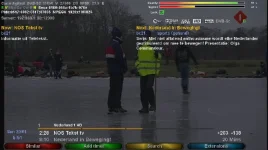
might want to edit out your server address in that screenshot Rob
 

OpenViX Feeds Status

Back
Top