Superb quality and spec AB-Com PULSe 4K SE. Crazy offer! Only £99! FREE UK DELIVERY! 4K UHD, Enigma 2, Multiboot 4 images & more!...
Superb quality and spec AB-Com PULSe 4K Rev II Twin Satellite tuner only £149! FREE UK DELIVERY! 4K UHD, Enigma 2, SATA HDD facility, Multiboot 4 images & more!...

Duo2 Dead - White LED / Blank VFD and no Boot

  • Thread starter Thread starter Catface
  • Start date Start date
Status
Not open for further replies.
What kind of suggestion is that? Did you ever hear of any image killing any box at all :confused:

If you read the third paragraph from the bottom of my post that you quote the beginning of you will find that the act of FLASHING itself (meaning any image) could kill a box with a power supply that is failing.

In simpler terms reading a non-volatile memory chip happens at one voltage (it used to be 5.0volts on every non-volatile memory chip but newer more power efficient memory chips take less voltage to read so it could be as little as 2.5volts to read - it depends on the actual chip being used but it will still be a higher voltage to write to the chip and possibly a third different voltage to erase the chip - it depends on the exact chip and its design architecture) and writing new data or changing some data on the chip will require a higher voltage for a 5.0volt read memory chip you used to need at least 6.75volts to write and around 9.0volts to fully erase the non-volatile memory chip (not to be confused with computer Memory [RAM] which is volatile memory so all data is lost the moment power is disconnected).

So if a PSU is failing it generally loses output capacity measured in Amps - to create the higher NVM WRITE voltage the motherboard will draw more amps from PROBABLY the 5.0volt PSU rail and step it up to whatever voltage is required to WRITE to the NVM chip which will not reliably happen so corrupting the NVM.

Grundig SKY boxes used to have a known PSU fault (about 10 years ago) so when Sky updated the firmware OTA the box would download then erase NVM fail to successfully write the new firmware to the NVM and leave you with a bricked Grundig Sky box - to fix it you had to repair the PSU & then extract a known good firmware from another Grundig Sky box and flash that using a chip programmer into the repaired Sky Grundig box & finally the box would come back to life.

So I think when the Duo2 does an update it fails to correctly re-flash the NVM (due to a lack of voltage from a lack of PSU current) and that is why the boxes get stuck in a boot loop.

I thought I read on the forum that clone boxes get deliberately bricked by original images - but that is not what is being discussed here - The hunt for the elusive clone box - nothing like a bit of clone hysteria to maintain price support i.e. that box is cheap, so must be a clone - better spend an extra hundred pounds to get a genuine one with the genuinely cheapo capacitors!!!!!!

Best Regards
 
the box worked fine after flashing.Is now 11 weeks away in repair.Vendor says that 12 weeks seems to be a normal repair time for VU+.Talking off service from VU+ I'll be waiting until the box is back. If it takes to long I will start a law suite to the vendor en VU+ for a full refund because off lack off service under warranty.
Seems that ther is also a strange warranty problem : my belgium vendor gives 2 years and the other gives 3 years. I have 2 boxes here.
 
bellejt - Hopefully your other box will behave itself!

Sure you all already know but there is always the "eu directive 24 month warranty" (Google it) which is meant to give everything sold in the EU an automatic 2 year warranty - which could prove useful if somebody is stuck with a potential £400 (ish) loss from a dead Duo2 box on their hands.

In general do you all keep your Duo2's on a shelf by themselves to keep them cool or are they in a stack of hot equipment?

There is a distinct constant hot spot on my Duo2 on the top of the plastic above the Infra Red receiver - do they all do this?

Does the number of tuners internally plugged in plus the two possible external USB Cable tuners as well (potential total of SIX Tuners - which is why I got a Duo2 in the first place) increase the current load on the Duo2 and cause them to fail?

What about motorised dishes? Don't yet have one but intend to get one.

Always wondered if you use one of these http://www.world-of-satellite.co.uk/DiSEqC-Motors-Positioners and all the power comes direct from the receiver as well along the Coaxial satellite cable isn't the total applied current load going to start getting pretty high for the receiver to handle all by itself?

My intention was to get a 1.2m motorized dish using a gadget like this "satellite positioner" (Google.Com it) to take the Diseq command off the co-ax and separately provide power from the gadget directly to a SuperJack (Jager) linear Ram type dish mover - then I spotted this on http://www.amazon.com/ASC1-Satellite-Actuator-Positioner-Controller/dp/B00HUJA6NA looks like a beast of a gadget compared to the rest - bit too pricey - but of greater interest is the current ratings on the back panel (you can see in the amazon rear photo) 38Volts DC at 5Amps dedicated just to operating the SuperJack & not drawn from the satellite box itself - voltage is too high for a Diseq positioner powered down the coax obviously but it raises the question about total possible applied load to the Duo2 sat box vs. what can the sat box comfortably supply to drive everything without failing?

I am not recommending any of this stuff http://www.superjack-solar.com/ (shows more) not sure what to buy for my self but apart from its cost I like the look of http://www.titaniumsatellite.com/asc1 like a sledgehammer to crack a nut.

I just want to motorize a big dish WITHOUT making my Duo2 fail - to this end I think it would be safer to have an external Dish moving PSU.

Any thoughts anyone???
 
Last edited by a moderator:
both my VU duo2's have a temp from under 39 degrees in full working condition.I also have a dish with motor SG 2100 and working fine.The rotor can have dishes to up 1.20 m.Usals are used for positioning.The main box has also a 1 TB HDD.In the main box also 2 dual twin tuners.
 
bellejt - have you set the fan to keep running in the Duo2 when it goes in to standby? Flashed my Duo2 with four different VIX images over time and so far each one turns the fan completely off for standby - personally I think that is asking for trouble and it is an easy setting to miss.

By "SG 1200" I think you mean this http://www.galaxy-marketing.com/sg2100.htm which looks like a good motor and I am sure it can drive 1.2m dishes BUT my personal worry is that on the link the spec says it draws a load of between 200mA to 350mA on to the Duo2 (50mA in Standby Mode - I presume that means not when watching a channel?).

My personal opinion is that the kind of motor (that is very popular) that you have been sold (the SG1200) that takes its power only from the Duo2 (via the Co-Ax ONLY) turns the Duo2 into a very expensive power supply that will have its life shortened by driving the motor at what looks like (from my initial reading) a constant 200mA which is a lot of current (relatively speaking) for any satellite receiver to supply.

The difficult question to answer is how much spare capacity in Amps does a Duo2 have after running its motherboard, the two display boards, the hard disk and all the connected tuners?

It must by design have at lest enough spare current capacity to run all the items listed in the above paragraph (current draw of the Hard disk is the only real variable in the list) or legally it would have a design fault built in to it (Design Fault = Refund time as fault existed from the outset) BUT is there any current (Amperage) left over to also power a dish motor directly & is it enough?

Again it is possible load vs. actual applied load and how much load does the voltage drop of the cable run to the dish where the motor is add plus the voltage drop of the connections which steadily corrode especially outdoors so the voltage drop goes even higher taking the applied load higher with it - I use solder on F - Connectors to stop corrosion.

The Duo2 designers must (or at least they should - but it costs money to build in spare capacity) have allowed for all that - but cooling is a variable - BUT can the Duo2 also supply the added load of the SG 1200 (or any of that type or motor) on top of everything else - or do Satellite Equipment Dealers make a healthy living out of the Co-Ax only powered dish positioners rapidly blowing the satellite receiver?

bellejt - No matter what you are entitled to a full repair or replacement of your Duo2.

But personally I would never use a relatively expensive Duo2 to directly power any positioner (like the SG1200) via the Co-Ax - But I am not disputing that it all works just that it could be overloading the Duo2 and causing it to fail early.

I personally would go to the extra trouble and expense of laying the 5/6core motor power and sensor cable use a superjack type linear ram actuator (trying to figure out exactly which one myself) and control the superjack probably using that overpriced monster of a positioner I have my eye on (the Titanium Satellite ASC1 - look at its current output 5Amps that is 5,000mA!) that way the Duo2 passes its Diseq commands to the ASC1 (or whatever similar gadget you prefer instead) it interprets the command and moves the dish using power from the ASC1 NOT the more precious Duo2 so the dish motor cannot put any load on the Duo2 so the Duo2 cannot be harmed by that cause.

There is also an argument if you go for superjack type ram positioner over whether you should get the superjack with reed switch position sensors or optical type position sensors - the controller will have to be able to understand the sensor type you go for.

Opinions?
 
Last edited by a moderator:
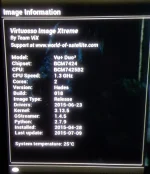
I was looking at the temperature of my Duo2 last night - the highest the temperature ever got was 26C after a couple of hours while recording two HD channels and watching a third HD recording – now that is what I call a low operating temperature.

I do not use any fan control program other than the one built into the standard VIX image – but I do set the fan to run slowly & constantly in standby mode.

Does that mean that the relatively high temperatures you both report are caused by a worsening electrical fault developing in your Duo2’s meaning impending failure OR electrical overload OR being in a stack of hot equipment with inadequate ventilation?

I have an internal 1TB 3.5 inch HDD and a dual input single satellite tuner card in my Duo2.

The fan arrangement in the Duo2 has always struck me as totally daft – it is an odd size at 50MM by only 10MM thin! And there is a huge amount of adjacent internal empty space to accommodate a much thicker fan – if only it was a 60MM fan instead of the 50MM you could easily get a 25MM thick fan in and then really shift some air with the deeper fan blades – you can even get very deep 35MM fans in 60MM Diameter which I would mount on rubber pins instead of steel screws & probably cut out the back panel metal grille for maximum airflow & silence.

Strangely the Duo2 fan is nosily mounted using metal screws – even SKY Satellite boxes (when they finally started fitting fans to them) fans were mounted not with metal screws but soft rubber pins instead to decouple the fan from the metal chassis and stop fan noise – Vu+ instead rubber mount the internal Hard disk – so why not the fan as well?

Considered using a duct (like this http://www.frozencpu.com/products/6...or_-_UV_Green.html?tl=g47c121s442&id=Se8gxccu ) externally mounted to change the fan size but no 50MM ducts existed when I last looked – then decided not to bother modifying that duct or do anything as according to the reading it runs cool at 26C anyway.

Where does the Duo2 get an idea of the Fan RPM from? After all it is only a 2 wire connection so the box has no idea from a third RPM feedback wire if the fan is even running or if it has failed – measuring fan current draw would be daft as if the fan locked up or the bearings went stiff from dirt the current draw would go up not down & the box would not have a clue – till overheating shuts it down!

Do your fans actually run? Have you looked & checked? Can you see them spinning?

Then again a lousy 50MM skinny fan that is an odd & difficult to change size that is also hard mounted with screws to make yet more noise which would overall discourage fan use – that combined with four different VIX images that do not run the fan at all in standby (under default settings) is a recipe to sell a lot more Duo2’s!

Rob & bellejt you both have motorized dishes is that what is causing the heat issue?

Rob describe how you turn your dish?

bellejt I think you and I were both complaining on another thread that Hades ruined the PiP function that was previously working on our Duo2’s Rob I think you were commenting in the same thread.
http://www.world-of-satellite.com/s...ws-current-progarmme-name&highlight=Pip+Hades

bellejt – by any chance is the box that you have in for repair the one that PiP on Hades stopped properly working on? If it is that means my Duo2 will conk out too!

If you have got that same Duo2 with the PiP fault now running on VIX 3.2 is PiP now fixed? Does PiP failure imply looming box failure?

Or has your box come back from repair and PiP function is now working again?

My Duo2 was bought in May 2014 how old are your Duo2’s?

Best Regards
 
Get a grip, man - no processor runs at 26C! That's only marginally above room temperature in the UK or Ireland. It's below room temperature if you live in southern Europe:eek: A fanless CPU or GPU will run 80C+ easily and a fan will reduce it to 45C or thereabouts. If you are seeing temps of 26C, then there is either an error in the driver software or it is a case temperature rather than an actual CPU or GPU temp.
 
Get a grip, man - no processor runs at 26C! That's only marginally above room temperature in the UK or Ireland. It's below room temperature if you live in southern Europe:eek: A fanless CPU or GPU will run 80C+ easily and a fan will reduce it to 45C or thereabouts. If you are seeing temps of 26C, then there is either an error in the driver software or it is a case temperature rather than an actual CPU or GPU temp.

Exactly how high do you have the heating turned up if your ambient room temperature is around 26C - that must be almost unbearable - we are not in Siberia!

Or are you saying you heat your home from the exhaust vent heat of electronics equipment - in which case the more heat generated the better - more power to you!

26C is the temperature reported in the information panel of ViX Hades - are you really saying a standard ViX install is really that bad or inaccurate?

Do you have a Duo2 and if so what temperature does it report in the ViX info panel?

Upper operating temperature is a limit not a contest - the cooler it runs the longer it lasts!

Check out Intel Microprocessors datasheets for upper temperature limits - unless you are frying food on your microchips the only thing those temperatures will achieve is to make computer chip etc. manufacturers rich by rapidly burning out microchips (in those temperatures the capacitors will go first!) and paying more money for new equipment - details please.............

Has anyone checked if their exhaust / cooling fans are actually running - actually looking at the fan to see it rotating?????
 
Last edited by a moderator:
26 degrees is when the box is in deep. Normal temperature readouts for STB's is 40 - 75 degrees. The actual SoC will be far hotter but we depend on where the sensor is located.
 
26 degrees is when the box is in deep. Normal temperature readouts for STB's is 40 - 75 degrees. The actual SoC will be far hotter but we depend on where the sensor is located.

Take a look at the picture I just took it shows 25C on the TV screen - the box has been running all evening non stop - Rob explain the temperature in the picture - the Duo2 has been in use for hours.

You have the same Duo2 as me - so you are saying the ViX Temperature readout on the information page is totally meaningless?

So Rob where are you getting your "meaningful" temperature readings from?

If what you are saying is true then ViX massively underreports the operating temperature of the box - how massively stimulating for sales of new boxes!!! What a money spinner.

Are you saying there is more than one temperature sensor in a Duo2? How many temperature sensors are you saying there are? Beyond the one in the HDD.

So according to you that is one temperature sensor integrated into the main Intergrated Circuit / CPU and another thermo-diode/resistor sticking out of the motherboard?

I have rested my finger on top of the Screen Temp.webpblack heat-sink directly over the CPU in the past and it is pretty cool - nowhere near 75 degrees - but Rob do you mean C or F ?

So if there is a second temperature sensor other than the one producing the 25C reading then why does ViX give only the reading that is meaningless according to you - so how does one go about accessing the meaningful true reading to which you refer???? And why does ViX according to you ignore that reading?

Lets all get to the bottom of this for once and for all - thrash the temperature issues out or keep paying for replacement boxes & repairs - due only to unchecked heat & odd / different temperature readings.

Best Regards

PS Are your heat-sinks firmly attached to your CPU's - there is no visible fixing method so I presume it is glued on with what should be thermally conductive glue - Sky HD boxes CPU Heat-sinks were glued on to the Thomson MK4 Generation Sky HD box - and that one kept falling off when the glue regularly went bad - the HDD caddy above the CPU kind of stopped it coming completely adrift but it still meant zero effective CPU cooling - even worse if a DiYer superglued it back into place the glue either acted as a thermal insulator or depending on the solvent content of the glue the glue would occasionally smoulder - the MK6 Sky HD boxes by Amstrad (god help us all) use a spring steel "Z" clip and a thermal interface pad - a lot more reliable than the thermal glue - has an unscrupulous retail dealer been breaking the glue bond between Duo2 CPU and Heat-sink?? Or is it cack handed owners recklessly installing Hard disks??
 
Last edited by a moderator:
If what you are saying is true then ViX massively underreports the operating temperature of the box - how massively stimulating for sales of new boxes!!! What a money spinner.
The level of paranoia in this thread has reached peak.
If you have a well working box, enjoy it.
If any box has a hardware failure & is still covered under warranty, use it.
 
Status
Not open for further replies.

OpenViX Feeds Status

Back
Top