Joe_90
Moderator
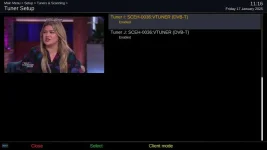
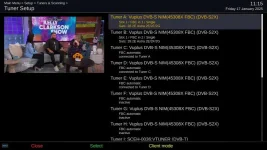
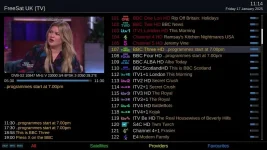
I just got delivery of an Uno 4kSE on Thursday. I've set it up for multiboot so I can test Dev and Release images. This will be my daily driver replacement for a 10 year-old GB QuadPlus, so her indoors will be using it mostly. Most of our usage will be on Freesat or SKY FTA. I am finding the FBC tuners particularly useful even with my universal LNB twin feed as it gives huge flexibility in recording from multiple transponders at once. I may well replace the LNB with a unicable model later this year which will give ultimate freedom in selecting programmes for recording.
Despite the warnings from more learned members of the dev team, I went and bought a USB DVB-T tuner to provide access to my local Saorview transmitter (Irish equivalent of UK Freeview but uses DVB-T and not DVB-T2) as the Uno only has one internal tuner slot. The Sony Play TV twin tuner (DVB-T only!) is available from a local second-hand hardware chain (Cex) for €8 plus postage, so a no-brainer really. I tested the Play TV unit on my AX61HD over the past 10 days or so and I haven't had any issues with it in normal operation. The only glitch I noticed was that it would fail to initialise if I soft re-booted the AX61 after a software update or re-flash or whatever. The logs would indicate that the Play TV unit was found in a "warm state" and the DiB7000 driver would not load the firmware into the tuner. I had to power cycle the receiver (or put it into deep standby) and reboot for it to find the Play TV in a "cold state" after which it would load the firmware and it would initialise properly. The Uno had no such issues as it seems to power off the USB ports on a reboot, so the DiB7000 driver always finds the Play TV box in a "cold state" and it downloads the firmware on every boot.
Another difference I noticed with the Uno is that it seems to keep a realtime clock (or pseudo realtime clock) running while it is in deep standby. So, even if there are no DVB-T or DVB-S transponders available or there is no network available, the box will display the correct time and timestamp the logs properly after a boot from deep standby, providing I don't pull the mains power completely. All of my other receivers are dependent on setting the correct time from a transponder or NTP or from the dreaded fake-hwclock.
The only minor annoyance with the Uno is that it has a power LED (white) which remains on when it is in deep standby. I can't find any software setting to turn it off, so, while it is in the bedroom on test, I am using a bit of tape to block the light. Once I have had it on test for the next week it will go into its permanent location in the living room. The power LED won't be an issue there. It's not particularly bright but is an annoyance in a bedroom environment!
Despite the warnings from more learned members of the dev team, I went and bought a USB DVB-T tuner to provide access to my local Saorview transmitter (Irish equivalent of UK Freeview but uses DVB-T and not DVB-T2) as the Uno only has one internal tuner slot. The Sony Play TV twin tuner (DVB-T only!) is available from a local second-hand hardware chain (Cex) for €8 plus postage, so a no-brainer really. I tested the Play TV unit on my AX61HD over the past 10 days or so and I haven't had any issues with it in normal operation. The only glitch I noticed was that it would fail to initialise if I soft re-booted the AX61 after a software update or re-flash or whatever. The logs would indicate that the Play TV unit was found in a "warm state" and the DiB7000 driver would not load the firmware into the tuner. I had to power cycle the receiver (or put it into deep standby) and reboot for it to find the Play TV in a "cold state" after which it would load the firmware and it would initialise properly. The Uno had no such issues as it seems to power off the USB ports on a reboot, so the DiB7000 driver always finds the Play TV box in a "cold state" and it downloads the firmware on every boot.
Another difference I noticed with the Uno is that it seems to keep a realtime clock (or pseudo realtime clock) running while it is in deep standby. So, even if there are no DVB-T or DVB-S transponders available or there is no network available, the box will display the correct time and timestamp the logs properly after a boot from deep standby, providing I don't pull the mains power completely. All of my other receivers are dependent on setting the correct time from a transponder or NTP or from the dreaded fake-hwclock.
The only minor annoyance with the Uno is that it has a power LED (white) which remains on when it is in deep standby. I can't find any software setting to turn it off, so, while it is in the bedroom on test, I am using a bit of tape to block the light. Once I have had it on test for the next week it will go into its permanent location in the living room. The power LED won't be an issue there. It's not particularly bright but is an annoyance in a bedroom environment!
Last edited: