Superb quality and spec AB-Com PULSe 4K SE. Crazy offer! Only £129! FREE UK DELIVERY! 4K UHD, Enigma 2, Multiboot 4 images & more!...
Superb quality and spec AB-Com PULSe 4K Rev II Twin Satellite tuner only £179! FREE UK DELIVERY! 4K UHD, Enigma 2, SATA HDD facility, Multiboot 4 images & more!...

Triax cable

Bogart

Member
Joined
Oct 21, 2019
Messages
42
Reaction score
1
Points
6
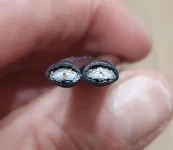
Have just received some shotgun cable supposedly suitable for Sky etc. It is marked Triax TX63. First thing I noted was how thin it is and the plastic dielectric is oval it is as if the cable has benn squashed.It is way thinner than any other sat cable I have seen. It is more the oval shape that is concerning me. I have attached a photo.

TRiax.webp
 
Have just received some shotgun cable supposedly suitable for Sky etc. It is marked Triax TX63. First thing I noted was how thin it is and the plastic dielectric is oval it is as if the cable has benn squashed.It is way thinner than any other sat cable I have seen. It is more the oval shape that is concerning me. I have attached a photo.

View attachment 67008
Could be fun screwing on the cable connectors
 
Have just received some shotgun cable supposedly suitable for Sky etc. It is marked Triax TX63. First thing I noted was how thin it is and the plastic dielectric is oval it is as if the cable has benn squashed.It is way thinner than any other sat cable I have seen. It is more the oval shape that is concerning me. I have attached a photo.

View attachment 67008

The oval shape would worry me. Cable that has been crushed or kinked can have some strange reflections.

What is the (white) dielectric? Is it foam or does it have 5 air holes.

It's common for sky shotgun cable to be the much thinner XX65 or xx63 type. It has a higher attenuation per meter than the ct100/wf100 type but it appears to work for the majority of sky installations.
The thinner XX65 or XX63 cable requires a smaller F connector to clamp or twist on to the braiding. The thinner body F connector still mates to a standard F connection.

Personally I would ditch that cable and go for a well known brand, Webro WF65 for the thinner shotgun cable. W = webro, F = foam dielectric which is a lot more robust than the air spaced dielectric
https://www.webro.com/570021.html

or WebroWF100 twin for the thicker cables

There are other manufactures of decent cable with foam dielectric usually with an "F100" or "F65" in the cable type number (the latter being a thinner type cable).
 
Right an update. If I push TV button and then green button, satellites, I get a list of channels. Having done a scan on tuner B I now get freechannels most of which I do not want.
I suppose it is too much to be able to just scan Freesat channels, otherwise it is delete hundreds of others. Am making the assumption that WoS only set it up for Freesat on tuner A and leave B free.
And one final question not related to the receiver but about the cable. I have run some new cable indoors and it is much thinner than what was there before. Lots of the F types are too big and will not grip the shield, is this the norm now?

There are two types of cable commonly used.

The thicker cable often designated xx100 where the xx usually designates the manufacturer and type of dielectric (example WF100 = Webro as the manufacturer and Foam as the dielectric which is more robust).
The cable may also have a type number of RG6 but be aware that some RG6 is unsuitable for satellite use.

The thinner, and usually twin, cable often designated xx65 or xx63. This cable is often used by installers because its cheaper but possibly OK for millions of installations. This thinner cable has more signal attenuation per metre length and is possibly unsuitable for very long connections. It may not be suitable if you live in a marginal area for satellite with the "wrong" size dish. There are two commonly used dish sizes in the UK, zone 1 and zone 2.

The thinner cable has a different F connector to be able to clamp or twist on to the smaller diameter screen and outer insulation of the cable.
Random example from Ebay
Code:
https://www.ebay.co.uk/itm/126001980605

The thinner body F connector still mates to a standard F connection.

In my experience fitting the smaller type F connectors to xx65 cable is more fiddly than fitting a F connector to xx100 cable.

If you are using the wrong F connector then this may be why you cannot receive satellite channels. You need a good connection via the centre pin AND the screen braiding.
How to fit an twist on F plug.

http://www.satcure.co.uk/tech/fplugs.htm

Note: Satcure are no longer trading but their technical pages have been left up on the web for a good number of years.
 
Last edited:
Ah right first time I have come across the thinner cable. That may be why using it I get occasional breakup wheres before was fine. I have the bigger zone 1 dish but might get a bigger say 80cm mesh dish and a good LNB as I do not really want to re run the cable if possible that will be last option. I will check the dish alignment first.
As stated the sammler F plug is, in my mind, way more awkward to fit to the plug than the larger F plug and bigger cable plug.
Is the thicker cable that much better? I have around 15m of older cable before I connect the thinner cable to it, had to run cable differently than before. And there is some 10m of the thinner cable before the receiver.
I think I have now got my head around getting the channels on sat and terrestrial.
One final question on selecting a channel on sat it sates a signal strength in dB what should be aiming for as a miniumum.
 
You really shouldn't be joining different cables. Each join introduces losses. Should be a continuous run from LNB to receiver. Sky dish Zone 2 is bigger than Zone 1 - is that what you mean? Bigger dish and thicker cable = better signal. LNB doesn't make that much difference except in very marginal conditions.
 
No way around having a join as existing cable would not reach receivers new position. And yes I have the bigger dish ie the 60cm one. Am not sure if a new LNB with as high a gain as possible would help. I think that most LNBs gains are roughly the same. Are somje better than others. Finally I could always fit a larger dish as I do not really want to run the cable again.
 
You really shouldn't be joining different cables. Each join introduces losses. Should be a continuous run from LNB to receiver. Sky dish Zone 2 is bigger than Zone 1 - is that what you mean? Bigger dish and thicker cable = better signal. LNB doesn't make that much difference except in very marginal conditions.

The type of cable makes the biggest difference

An article on the thicker type cable written perhaps 25 years ago and referencing analogue terrestrial TV however the same considerations/advice holds for both digital terrestrial and satellite. Obviously the quoted prices are way out of date.

https://www.wrightsaerials.co.uk/articles/coax-cable-quality.shtml

The thinner shotgun cable xx63 or xx63 typically has an attenuation mid way between the lines C and D on the graph shown in that article but bear in mind the attenuation shown is for 100 metres of cable. Also bear in mind that most satellite installers for Sky probably use the thinner shotgun cable (Freesat in the UK typically uses the same dishes and the signals come from the same cluster of satellites).

If joining cables the method of joining is important.
http://www.satcure.co.uk/tech/extend_cable.htm
(again, Satcure are no longer trading)
F barrel connector are readily available from many sources. If the join is exterior then wrap the join with self amalgamating tape which is also available from many sources including Toolstation and Screwfix in the UK.
http://www.satcure.co.uk/tech/self_amalg.htm
Note:The person who owned Satcure was fond of using grease on F connectors. The self amalgamating tape doesn't stick to grease so it may be better not to use it.

If you have not used the F barrel method of joining cables then this may explain a change of picture breakup pattern.

The boxes don't tend to give a signal strength, they give SNR Signal to Noise Ratio which is more of a signal quality figure. As Joe_90 says a different LNB is unlikely to make a difference to this figure.
BER is the Bit Rate Error and ideally this should always be zero for a reliable picture.
 
No way around having a join as existing cable would not reach receivers new position. And yes I have the bigger dish ie the 60cm one. Am not sure if a new LNB with as high a gain as possible would help. I think that most LNBs gains are roughly the same. Are somje better than others. Finally I could always fit a larger dish as I do not really want to run the cable again.

Zone 1 dish 40cm x 60cm
Zone 2 dish 60cm x 80cnm
Minus a couple of cm dependant on the manufacturer

Zone 1 dishes are used for high signal strength areas
Zone 2 dishes are used for lower signal areas. In general, in the UK and for the Astra 28.2E satellites the further north in the country the weaker the signal.
 
Interesing article regarding cables. Yes the thin stuff is marked Triax 63 so do I assume 100 cable has a csa around 50% more? Having inherited this system with the cables from the LNB going underground, they are very thick at the LNB end , they appear indoors as a thinner cable so there is a joint somewhere but who knows where.. I have aligned the dish and got a definite increase in signal strength so I may get away with it. If I am still not happy its either change the 10m of 63 for 100 and/or get a bigger dish. I would assume a bigger dish will reap bigger benefits that changing out 10m of cable. As I said I have the larger sky dish nearly 80cm across and live in Norfolk.
 
A bigger dish will give you a better signal margin during rain and will overcome signal loss in the thinner cable and joins. Slightly more difficult to aim a bigger dish as it's more tightly focused, but you seem to be familiar with the process, so you shouldn't have issues.
 
Have decided to get a bigger dish as suffered a little bit of breakup this morning. I replaced the 10m TX63 with 10m of WF100to see if it made any difference. None whatsoever as the signal strength dB does not alter one jot. So it is a new dish and a new universal LNB.
 
And one quick last , well for now, question about couplers.They all seem to have a longer thread at one end. Is there a reason and should they be fitted any particular way roiund?
 
Have decided to get a bigger dish as suffered a little bit of breakup this morning. I replaced the 10m TX63 with 10m of WF100to see if it made any difference. None whatsoever as the signal strength dB does not alter one jot. So it is a new dish and a new universal LNB.

You are not looking at signal strength but the signal to noise ratio, effectively the signal level divided by the noise level. If you reduce the attenuation in the cable the signal level at the box will increase but the SNR will/can remain exactly the same.

In a typical domestic installation a zone 2 dish in Norfolk pointing at 28.2E, a commonly available and cheap LNB and a typical length of cable to the box should give you no signal strength problems, assuming that the dish is correctly aligned, the LNB is correctly mounted on the arm, the LNB skew is correct and the cable is of a decent quality. As said before, there must be millions of Sky installations using the thinner but more lossy cable.

Approximately how long is the cable between the dish and your box. You indicate your recent extension is 10m but how long was the original and from examining the end you joined to was it type a/b, c or d as in the linked article in post 11

You may get signal loss during rain (rain fade) but in my experience rain fade only occurs when the rain is so heavy that there is a two inch deep river running down the road outside of my house.
 
And one quick last , well for now, question about couplers.They all seem to have a longer thread at one end. Is there a reason and should they be fitted any particular way roiund?

The longer thread on one side is so you can fix it into a hole in a panel with a nut and still have some thread left to screw on the F connector.

Some sellers will include the nut and washer, possibly at an extra cost
Code:
https://www.ebay.co.uk/itm/155021059630?

Example of these barrel connectors fixed to a panel

barrel.webp

These barrel connectors are also used in faceplates (see the alternative images on that link)
Code:
https://www.amazon.co.uk/Type-Satellite-Coax-Faceplates-Port-White/dp/B078JX6GHY?

It doesn't matter which way they connect to two f connectors. There is nothing magic inside, it's all passive. it's just the recommended way to make sure that you don't break the continuity of the screen braid and still provide 100% screening around the centre connector. It also has the benefit of maintaining the 75 ohm impedance characteristics of the cable.
 
Last edited:
Right noted about the coupler fastenings, I just wondered. The cable is run as follows. Quad LNB 2 of which run to the living room, not used not connected. Other two go down side of an outbuilding, where the dish is mounted, then underground into the property passing under the floor of a room before arriving in the corner of what I call the tv room which is the first time I see the cable after it going underground. It starts off at the LNB as a very thick cable, thicker than WF100 but arrives at the tv room as a smaller cable looking like TX63 cable. Now where between the LNB and the tv room it changes I have no idea. The run from the LNB to the tv room is some 20m. There is then the additional run I have added of another 10m of TX63. This 10m run is only some 2m longer than it used to be before I changed the route of the cable and I never had breakup before. I did use a VU+ receiver before I managed to destroy it, 24v into it instead of 12v. I am quite happy to change the TX63 for WF100 if it helps. I could even go to WF125. I want to get this right as once finally installed the cable will be hidden behind a corner wall fascia glued and and non removable.
 
Right noted about the coupler fastenings, I just wondered. The cable is run as follows. Quad LNB 2 of which run to the living room, not used not connected. Other two go down side of an outbuilding, where the dish is mounted, then underground into the property passing under the floor of a room before arriving in the corner of what I call the tv room which is the first time I see the cable after it going underground. It starts off at the LNB as a very thick cable, thicker than WF100 but arrives at the tv room as a smaller cable looking like TX63 cable. Now where between the LNB and the tv room it changes I have no idea. The run from the LNB to the tv room is some 20m. There is then the additional run I have added of another 10m of TX63. This 10m run is only some 2m longer than it used to be before I changed the route of the cable and I never had breakup before. I did use a VU+ receiver before I managed to destroy it, 24v into it instead of 12v. I am quite happy to change the TX63 for WF100 if it helps. I could even go to WF125. I want to get this right as once finally installed the cable will be hidden behind a corner wall fascia glued and and non removable.

You say you inherited this arrangement so you have no knowledge of why a xx125 type cable was used. Was it used because of an abnormally long run was required or because the thicker cable can be buried, or both? This assumes that it is actually xx125 cable because if it isn't then all bets are off. Is there any indication on the outside of the cable about what it is. Often good quality cable has some identification marked every metre or so.

You can also lose signal at certain frequencies if the characteristic impedance is not maintained over the whole length of the cable. If for instance the hidden join between the thick and thin cables has been bodged you will have an impedance mis-match on that part of the cable. What can now happen if the length of the cable is changed (irrespective of the quality or attenuation of the extension cable) the reflections in the cable can change and maybe result in the changes you are seeing with picture breakup. Quoting a small section of the article on cables linked in post #11

"This isn’t the place to go into cable impedance, standing waves and what have you, but take my word for it, impedance bumps are a Bad Thing!"

I'm not suggesting that this is your problem but if it is spending money on a larger dish and LNB may not solve the problem. Investigating the cable join may be more productive. Don't forget a xx125 F plug will have different twist/clamp on diameter to suite the thicker cable.

Picture breakup and be caused by local electrical interference getting into the cable BUT usually as a result of using poor quality cable without 100% screening (cable such as the type D as in the cable article)
Is your new extension running parallel to any electrical cables and in close proximity? If so separate the cables.
Are there any wall plates in the path between the LNB and box? If so they should be fully screened.

Some notes on the difference between screened and unscreened wall plates
http://www.satcure.co.uk/tech/wallplates.htm
Satcure no longer trade.

Bear in mind that you probably don't want xx125 cable going to the back of your box. It is thick and stiff and doesn't hold a bend easily and is likely to put a strain on the F connectors at the back of your box. A xx125 cable would probably normally go to a wall plate and the box connects to the wall plate with a more flexible fly lead. The simplest of wall plates would just be a barrel connector :)
 
First of all thanks for the time and effort you are putting into the questions I am raising. I will have a close look at the external cable tomorrow to see if it has any markings. I am assuming the external cable is larger purely due to the length that needs running to get into the house. It looks to have been done by a professional as the LNB plugs are compression ones. I can check out if it is electrical interference by rigging up an 8m length of cable and running exactly as the original was. Though I would have thought if it was electrical interference it would be evident 24/7. Anyway I have my eyes on a 1m dish locally for sale on facebook. I would hope to see a definite improvement if I buy and fit that.
On you say so I have discounted the WF125 and will now probably not bother replacing the new 63 with WF100, for one as the new cable is run and fixed and again if I get this dish I would hope problem solved.
I will keep you updated and once again many thanks.
 
I have moved your posts about cabling from the switching tuner to this original thread about cabling.
 

OpenViX Feeds Status

Back
Top